









SPONSORED CONTENT
Why Spanish Artisanal Footwear Is Finding a Market in the Gulf
The espadrille wedge is quietly becoming a Gulf summer staple — and Spanish footwear no longer requires a trip abroad to buy.
By July, a summer wardrobe in Kuwait is doing two jobs at once. At home it has to survive months of heat, moving between air-conditioned interiors and the short, punishing walk between them. Abroad it has to travel — to Mediterranean coastlines, European cities and resort destinations where the dress code loosens and the days are spent outdoors. Very few items are asked to handle both. Summer footwear is one of them.
It is a large part of why the Spanish espadrille has held its place. Built on a jute rope sole with a light canvas or leather upper, it was designed for exactly the conditions the Gulf lives in for most of the year: heat, movement and informality. Unlike trend-driven footwear, it returns every season because it answers a real problem rather than a passing question — how to dress for warmth without looking careless.
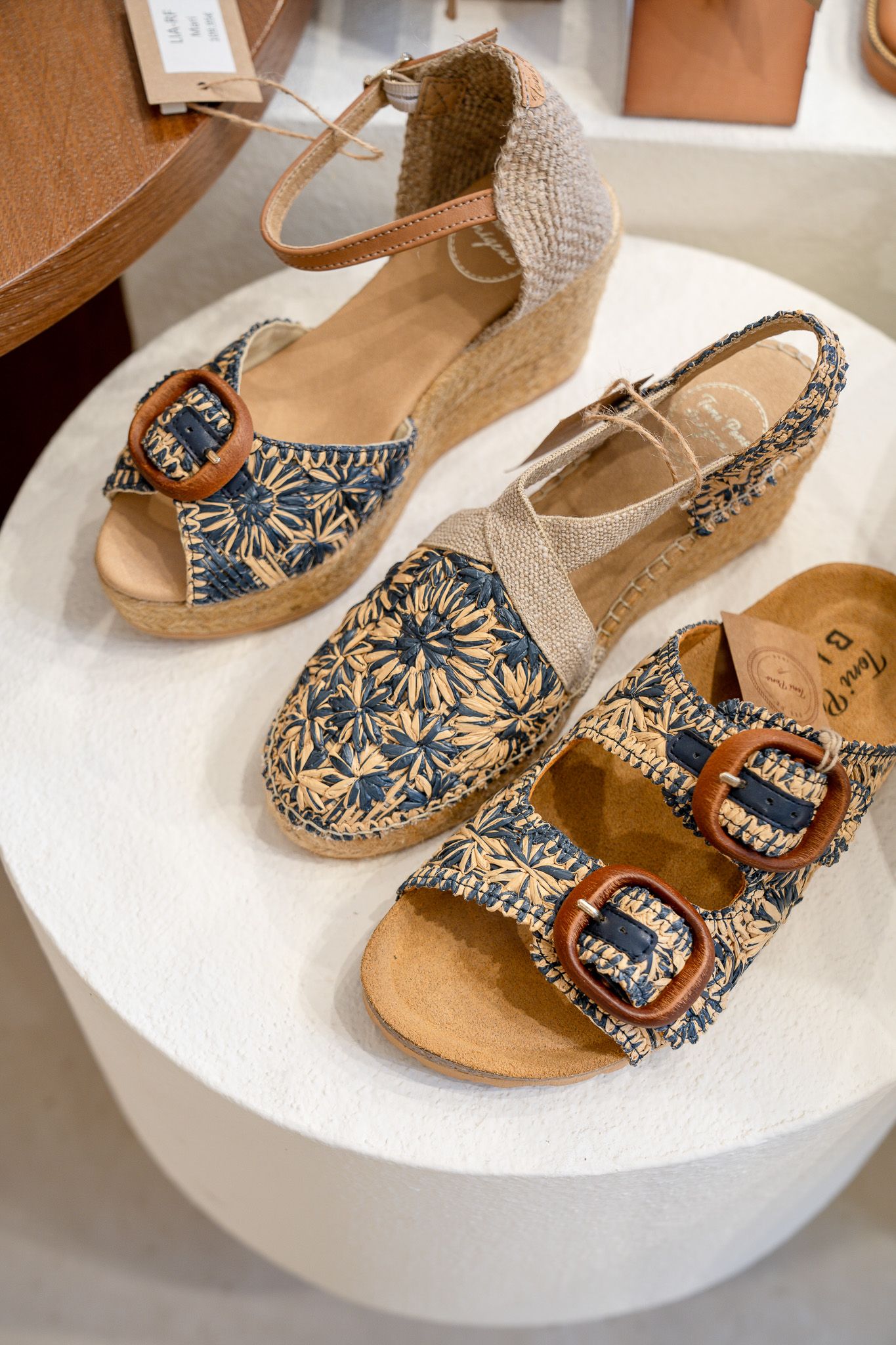
In recent seasons the wedge version has become the strongest expression of the category. It keeps the relaxed character of the traditional espadrille but adds height and structure. For many women that makes it more practical than a narrow heel and more considered than a flat sandal. It works with linen trousers, summer dresses, wide-leg cuts and abayas styled with lighter accessories — and, the part that matters most, it stays wearable through the length of an evening.
What makes the category relevant in the Gulf is less about fashion than about how the day is structured here. Plans move between indoors and outdoors, between family visits, restaurants and travel, often within a single afternoon. Footwear has to cross those settings without looking too casual in one or too formal in another. A wedge that is breathable, stable and neutral in colour manages it better than most alternatives, which is why beige, tan, black, ivory and soft metallics do most of the heavy lifting. They are the tones that carry from day into evening without a change of shoes.
The craft behind it is older and narrower than the trend cycle suggests. Toni Pons, among the better-known Spanish makers, began in 1946 as a small shoe factory in Osor, a village near Girona, producing jute espadrilles and leather boots in the traditional way. It turns 80 this year. The company is now headquartered in Girona, run by the third generation of the family, and reported revenue of 32 million euros in 2025, selling into around 90 countries. Its espadrilles are still made in Spain, in workshops concentrated around Alicante, Elche and Murcia, and the soles are still stitched by hand. The method has changed little, largely because it did not need to: the jute is braided, shaped, stitched and bonded with rubber, the upper kept simple, and the result breathes in a way moulded synthetic footwear does not.
The commercial side has been slower to arrive than the demand. For years Spanish footwear reached Gulf shoppers through holidays and airport terminals rather than regional retail — you bought espadrilles in Spain and wore them at home. That is changing. URIS, official retailer of Spanish footwear brands Toni Pons and Castell Menorca in the UAE, with stores in Dubai, Abu Dhabi and Sharjah, also ships across the Gulf, including to Kuwait, Bahrain, Oman and Qatar.
Choosing well comes down to how the shoe will actually be worn. For daily use, a moderate wedge height in a neutral colour covers the most ground. For occasions, ankle ties, finer textures or darker shades lift the same silhouette without changing it. The details that matter least are the ones easiest to see: sole construction, fit across the width of the foot and the stability of the base decide whether a shoe survives its second summer. Colour does not.
Jute also asks for a little attention, which is the thing buyers tend to learn late. The rope sole is a natural fibre and does not like being soaked. A wet espadrille should be left to dry in the shade rather than in direct sun or in front of a vent, both of which stiffen the fibre and shorten the life of the sole. Most contemporary designs, including espadrille wedges built for Gulf summers, sit on a thin rubber base that copes with marble floors and hot pavements far better than jute alone. And rotating two pairs across a long summer does more for durability than any cleaning product on the shelf.
That points to something broader in how the region is shopping. There is less appetite for the single statement purchase and more for pieces that come back, season after season, without needing to be replaced. A well-made espadrille wedge belongs firmly in the second category. It is not a shoe that announces itself. It is one that keeps getting worn.
For Kuwait and the wider Gulf, that is the quiet case for the espadrille. Retailers like URIS are betting that regional demand is structural rather than seasonal — that shoppers want footwear that is elegant without being complicated, comfortable without looking indifferent, and distinctive without depending on decoration. On the evidence of the last few summers, it looks like a reasonable bet. The espadrille wedge has stopped being a holiday souvenir. It is becoming a fixture.